

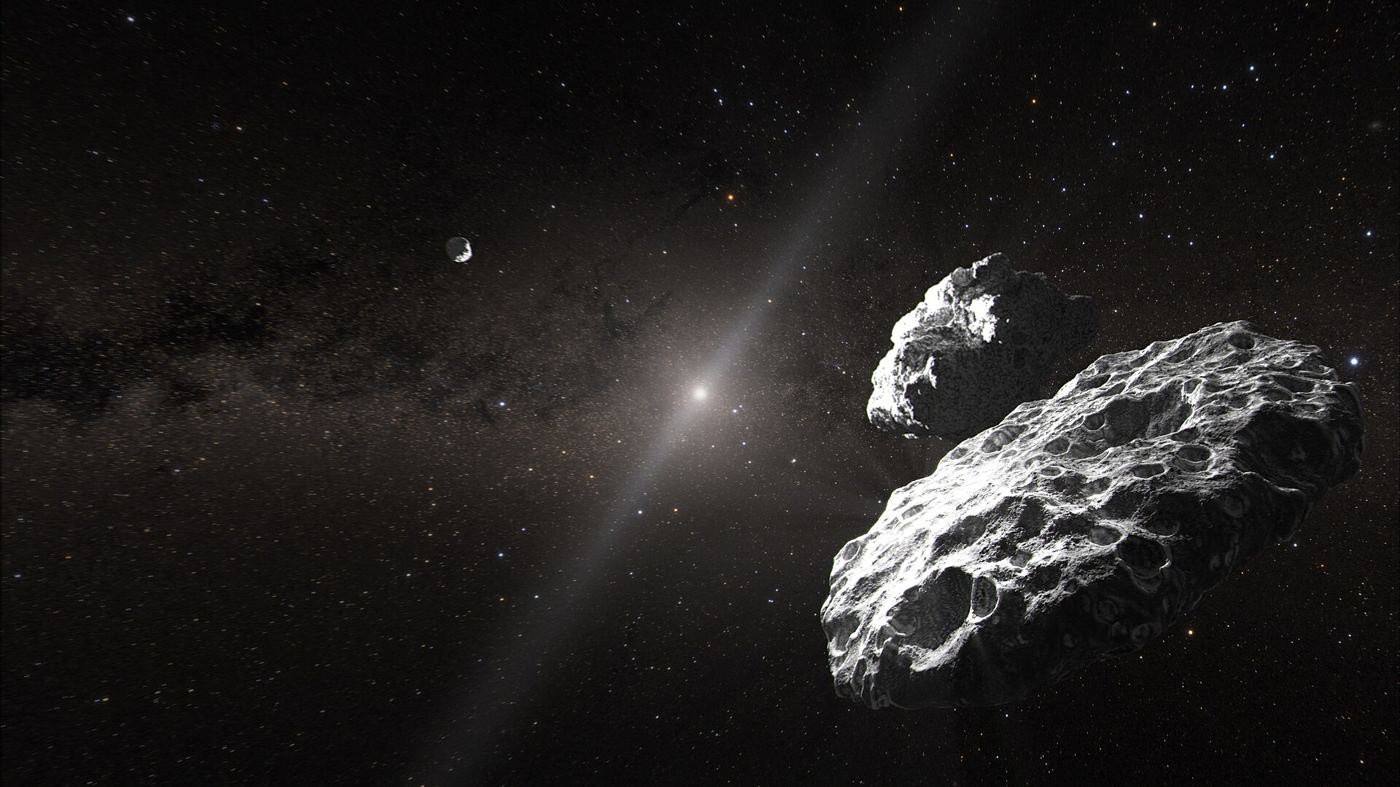
When an asteroid passes reasonably close to Earth, astronomers have a brief and valuable opportunity to bounce radar signals off its surface and build images far sharper than most telescopes can manage. Recent radar campaigns have used that technique to measure a passing rock’s size, spin and shape with remarkable precision, in some cases revealing an elongated body, a flattened pole or a small companion moon. Those details matter well beyond curiosity. An object’s rotation and structure influence how its orbit evolves under sunlight, and they determine how a deflection attempt would behave if one were ever needed. Radar ranging also pins down the orbit itself, often shrinking years of uncertainty about future approaches into a much tighter window. Teams schedule these observations months ahead, because the signal weakens rapidly with distance and the best geometry lasts only days. Even a handful of clear radar images can transform a fuzzy point of light into a characterised world with craters, boulders and slopes.
What the Evidence Shows
Planetary defence specialists say radar is the unsung partner of the surveys that discover near-Earth objects in the first place. Discovery telescopes answer the question of what is out there, while radar answers how big it is, how fast it spins and exactly where it is going. That combination decides whether a newly found object deserves urgent attention or can simply be catalogued and watched. Radar data also guide spacecraft missions, helping engineers rehearse approaches to bodies that may be rubble piles rather than solid rock. Several upcoming facility upgrades promise stronger transmitters and more sensitive receivers, extending useful radar range to more distant and smaller targets. Researchers are also improving the software that turns raw echoes into three-dimensional shape models, shortening the time between an observation and a published result. As survey telescopes discover asteroids at a faster rate than ever, the capacity to follow up the most interesting and closest ones with radar will remain an essential part of understanding our neighbourhood. Reporting and analysis from sources such as National Science Foundation track the same developments, and specialists following radar imaging of a passing near-Earth asteroid say the direction is now consistent across independent lines of evidence.
The Wider Context
The wider context is a research landscape in which replication and open data now decide reputations. Findings connected to radar imaging of a passing near-Earth asteroid are being checked by independent groups with shared datasets, and the teams involved publish their methods in full so rivals can test every step. That discipline is slower than a headline cycle, but it is why results in this area increasingly survive first contact with scrutiny.
What Happens Next
What happens next in the story of radar imaging of a passing near-Earth asteroid will be decided by follow-up work already under way: larger samples, longer observation and instruments that have not yet come online. The researchers involved are unusually united on one point, that the current results justify the next investment of time and money. Readers will not have to wait long for the first tests of that claim. You can follow related developments in our coverage of science.
There is a practical lesson in all of this for readers deciding what to do today. Start with the verified facts, be wary of anyone promising certainty, and prefer reversible steps while the evidence is still developing. Circumstances differ by country, income and personal situation, so general guidance should always be weighed against your own context before you act on it in any significant or lasting way.
